Wondering if Bowie should be your next move after living in DC? That question usually comes up when you want a different daily rhythm without feeling cut off from the region. If you are weighing space, commute patterns, homeownership, and day-to-day convenience, this guide will help you compare Bowie and DC in a practical way. Let’s dive in.
Bowie vs. DC at a glance
If you have lived in DC for a while, Bowie may feel like a noticeable shift in pace. Bowie is a city in Prince George’s County with roughly 58,000 residents across about 20 square miles, and the city describes it as convenient to Washington, Annapolis, and Baltimore.
The biggest difference is density. Census QuickFacts shows Bowie at 2,853.3 people per square mile, compared with 11,280.7 in Washington, DC. In simple terms, Bowie offers a lower-density setting than central DC, which can shape everything from housing choices to how you get around.
Housing in Bowie feels different
For many DC residents, the real question is not whether Bowie is better. It is whether the housing mix fits what you want next. Bowie is more ownership-oriented, while DC remains much more renter-oriented.
Census data shows Bowie has an owner-occupied housing rate of 83.9%, compared with 41.5% in DC. The median value of owner-occupied homes in Bowie is $459,300, while DC’s is $737,100. That points to a market where homeownership plays a bigger role in everyday life.
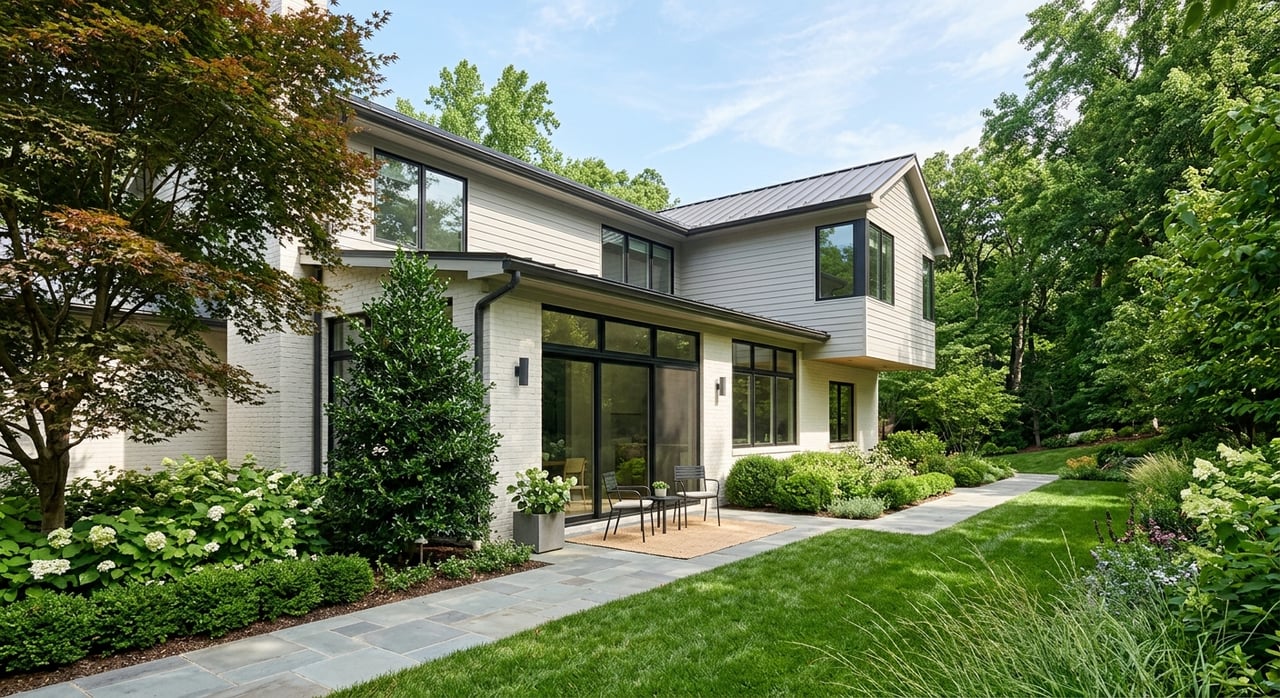
Bowie’s neighborhoods include single-family homes, townhomes, apartments, and senior living facilities, according to the city. That gives you a broader suburban housing mix if you are moving from a smaller condo, apartment, or rowhouse lifestyle in DC.
What that means for your next move
If you are hoping for more interior space, a different lot size, or a more ownership-heavy environment, Bowie may line up well with your goals. If you prefer a denser, more urban housing pattern with a stronger renter presence, DC may still feel like the better fit.
One important detail: do not assume Bowie is always the cheaper rental option. Census QuickFacts lists Bowie’s median gross rent at $2,330, compared with $1,954 in DC. For renters, the better comparison is lifestyle and housing type, not just a simple price assumption.
Daily life in Bowie is more suburban
Bowie tends to support a different kind of day-to-day routine than DC. The city says its neighborhoods and services reflect a mix of single-family homes, townhomes, apartments, and some condominiums, and city services such as trash and recycling are provided to residents in several of those housing types.
That supports a more suburban living pattern. Instead of the block-by-block urban feel many DC residents know, Bowie is often about residential communities, driving between errands, and having more open space nearby.
Green space is a major draw
If access to parks matters to you, Bowie stands out. The city says it has more than 1,373 acres of parks or preserved open space, more than 28 miles of paths and trails, and 97 ballfields and parks.
Allen Pond Park and White Marsh Park are two major local amenities. Allen Pond Park is described by the city as Bowie’s premiere park and includes the Bowie Ice Arena and Bowie Skate Park. If you want more room to get outside as part of your regular routine, Bowie offers that in a very tangible way.
Shopping, dining, and convenience in Bowie
Moving out of DC does not mean giving up convenience. Bowie’s retail page says the city has more than 90 restaurants and 200 shops, including Bowie Marketplace, Bowie Town Center, and Melford Town Center.
That means many everyday errands, casual dining options, and retail stops can stay close to home. The rhythm is different from DC, but the convenience is still there. It is just organized more around shopping centers and driving routes than a dense urban grid.
The city also points to nearby regional attractions such as Prince George’s Stadium, Six Flags Theme Park, Bowie State University, and the U.S. Fish & Wildlife Service National Wildlife Visitor Center. For many buyers, that adds to the appeal of having local amenities plus easy access to day-trip destinations.
Commute expectations matter
One of the most common mistakes people make is assuming a move to Bowie will automatically improve the commute. The data does not support that as a blanket claim.
Census QuickFacts shows Bowie’s mean travel time to work is 34.8 minutes, compared with 30.0 minutes in DC. So if your decision depends on a shorter commute, you will want to look closely at your actual route, work schedule, and transportation options.
Bowie is more car and corridor oriented
Bowie’s major state-maintained corridors include Routes 50, 3/301, 214, 450, and 564. The city also describes Bowie as easily reached from Washington, Annapolis, and Baltimore through Routes 3, 50, and 301.
That road network supports a driving-centered pattern. If you are used to walking to many daily needs or having a dense transit web nearby, Bowie will likely feel different. Many residents heading toward DC rely on driving, park-and-ride options, MARC service, or bus connections.
Transit exists, but it works differently
Transit access is available, but it is more corridor-based than neighborhood-based. MDOT says the Bowie State MARC Station is on the Penn Line and is a priority transit-oriented development site.
WMATA’s B24 route connects Bowie Park & Ride to New Carrollton Station, and the P24 route connects Bowie State University to New Carrollton Station. For DC-bound commuters, that often means transit can be part of the plan, but not always in the walk-out-your-door way many people associate with city living.
Is Bowie right for you?
The best way to answer that is to think about the lifestyle you want, not just the address. Based on the available city and Census data, Bowie and DC offer different living patterns rather than a simple better-or-worse choice.
Bowie may be a strong fit if you want:
- A lower-density environment than central DC
- A housing market with a stronger homeownership pattern
- More access to parks, trails, and preserved open space
- A suburban mix of homes, townhomes, apartments, and local shopping centers
- Continued access to the larger DC region while living in Prince George’s County
DC may still suit you better if you want:
- A denser urban environment
- A more renter-oriented market
- A more walkable daily pattern tied to a city grid
- A lifestyle centered around dense transit access and close-in urban activity
A smart way to compare your options
If Bowie is on your shortlist, try comparing your current DC lifestyle against your real priorities for the next few years. Think about how much space you need, how often you commute, how important green space feels, and whether your housing goals are shifting toward ownership.
It also helps to compare monthly cost, time spent commuting, and how you want your weekends to feel. For some people, Bowie offers the right balance of room, convenience, and regional access. For others, DC’s density and urban rhythm still win.
The right move is the one that supports how you actually want to live. If you want help comparing neighborhoods, home types, or your next buying step in Bowie, Patricia Okolo can help you evaluate your options with clear, local guidance.
FAQs
Is Bowie more suburban than DC for homebuyers?
- Yes. Census and city data support Bowie as a lower-density, more ownership-heavy market with a broader suburban housing mix than DC.
Is Bowie cheaper than DC for renters?
- Not necessarily. Census QuickFacts lists Bowie’s median gross rent at $2,330 compared with $1,954 in DC, so renters should compare housing type and lifestyle, not just assume lower cost.
Is commuting from Bowie to DC easy?
- It depends on your route and schedule. Bowie has strong road access and some transit connections, but Census data shows its mean travel time to work is longer than DC’s on average.
Does Bowie have parks and trails for everyday recreation?
- Yes. The city says Bowie has more than 1,373 acres of parks or preserved open space and more than 28 miles of paths and trails.
What kinds of homes are available in Bowie for buyers?
- According to the City of Bowie, the local housing mix includes single-family homes, townhomes, apartments, and senior living facilities.